
Structuring a Quarterly Café Preventive Maintenance Agreement
Unscheduled espresso bar outages during morning peak hours result in lost revenue, wasted milk and beans, and frustrated loyal customers. A structured preventive maintenance (PM) agreement with a qualified commercial coffee equipment service provider transforms unpredictable emergency repairs into planned, budgeted service visits. The goal of a PM program is not simply to fix what breaks, but to identify and replace wearing components before they fail, maximizing uptime and extending the useful life of your equipment.
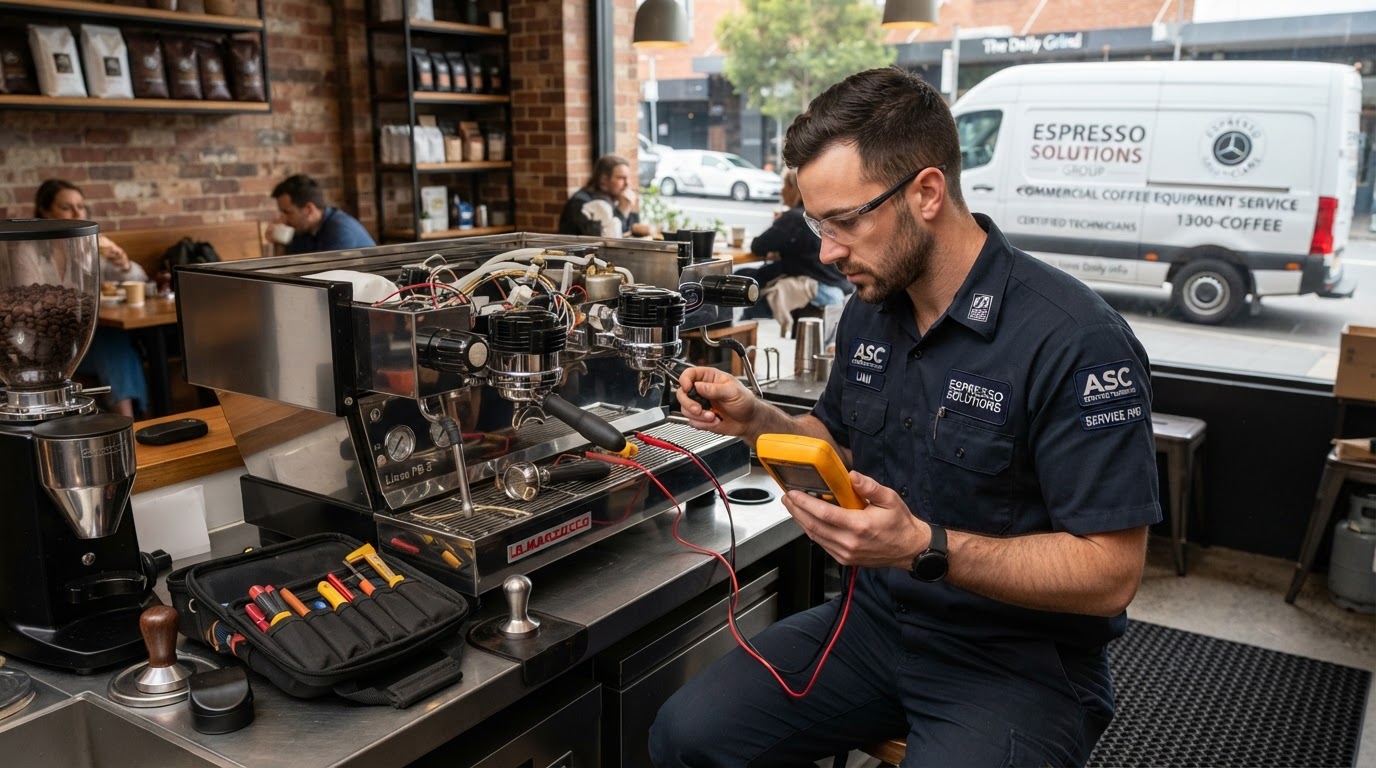
What a Quarterly PM Visit Includes: Replacement of group head gaskets, shower screens, anti-suction valves, steam wand rebuilds, flow meter inspection, and water filter pressure differential testing. The technician also checks expansion valve pressure, brew and steam boiler temperatures, pump output pressure and flow rate, all electrical connections for heat damage, and the condition of all visible seals and fittings. A thorough PM visit takes one to three hours per machine depending on complexity and should be scheduled during off-peak hours to minimize disruption.
Calibrating Temperature & Pressure: Technicians verify brew temperature with scace device instruments and adjust expansion valves to maintain 9-bar extraction pressure. Brew temperature consistency is critical for shot quality; even a two-degree variation is perceptible in the cup. The expansion valve (OPV) regulates brew pressure and should be set to the machine manufacturer's specification, typically 8.5 to 9.5 bar. Steam boiler pressure is usually set between 1.1 and 1.4 bar, corresponding to 120 to 126 degrees Celsius. These settings drift over time as springs age and seals wear, so quarterly verification keeps extraction dialed in.
ROI of Preventive Maintenance: Café owners with proactive service contracts experience up to 70% fewer emergency service calls over the lifespan of their machinery. The math is straightforward: a quarterly PM visit costs a predictable fee, while an emergency bar-down call during peak hours costs a premium emergency rate plus lost sales. Over a year, the PM program typically costs less than two or three emergency calls, and the reduced downtime preserves customer goodwill and staff morale. Additionally, well-maintained machines retain higher resale value and often last years longer than neglected equipment.
Customizing the PM Schedule: Not all cafés need the same service frequency. A high-volume shop pulling 300+ shots daily may benefit from monthly visits, while a lower-volume office breakroom machine might need only semiannual service. Discuss your daily drink volume, water hardness, and operating hours with your service provider to determine the right cadence. Some providers offer tiered agreements with different visit frequencies, response-time guarantees for emergencies, and included parts packages. Choose a plan that matches your risk tolerance and budget.
Parts Replacement Strategy: A good PM agreement includes proactive replacement of consumable parts on a schedule rather than waiting for failure. Group gaskets, shower screens, and steam wand O-rings are inexpensive and should be replaced quarterly. Expansion valve and vacuum breaker seals should be replaced annually. Pump rebuild kits and heating element gaskets may be replaced every two to three years depending on usage. Your technician should provide a parts replacement forecast so you can budget for larger expenses in advance.
Documentation & Reporting: After each PM visit, your technician should provide a written report listing all parts replaced, measurements taken (temperatures, pressures, flow rates), any components showing wear that may need future attention, and recommendations for the next service interval. Keep these reports in your service log. Over time, this documentation builds a picture of your equipment's health, helps justify the PM investment to ownership, and provides a valuable record if you sell the equipment or file a warranty claim.
Emergency Response & Downtime Planning: Even with excellent preventive maintenance, unexpected failures can occur. Choose a service provider that offers guaranteed emergency response times, ideally under four hours for bar-down situations. Ask whether they stock common replacement parts on their service vehicles, as a technician who arrives without the needed part must make a second trip, extending downtime. Maintain a backup plan for total machine failure, such as a loaner machine agreement or a secondary brew method (pour-over, drip) to keep serving customers while repairs are underway.