
Pre-Installation Checklist: Water Lines, Electrical & Counter Cutouts
Installing a commercial espresso machine without verifying site utilities is the leading cause of installation delays and immediate component damage. A professional installation begins weeks before the machine arrives, with careful preparation of the electrical, plumbing, and physical space. Failing to prepare properly can turn a one-day installation into a multi-day delay, or worse, damage the machine on its first power-up.
Electrical Drops: Commercial espresso machines typically require single-phase 208V to 240V power with 30A or 50A dedicated breakers. Multi-group machines and models with large steam boilers often require 30A or higher circuits, while some high-end three-phase machines require special electrical service. Verify the exact electrical specification on the machine's data plate or in the installation manual, and have a licensed electrician install a dedicated circuit with the correct voltage, amperage, and receptacle type. Never share an espresso machine circuit with other equipment; voltage sags from shared circuits can damage electronics and cause inconsistent performance.
Plumbing & Indirect Drains: Require a 3/8" cold water supply line with a shutoff valve and an indirect gravity drain within 5 feet of the machine footprint. The water supply should be filtered and softened before reaching the machine. Install a dedicated shutoff valve (not a saddle valve) so the machine can be isolated for service. The drain line must be an indirect connection, meaning it empties into a floor drain or drain box with an air gap, not a direct hard-plumbed connection. This prevents sewer backflow from contaminating the machine and is required by most plumbing codes. Ensure the drain line has a continuous downward slope with no sags that could trap water.
Bench Pre-Testing: Professional installers bench test machines in their workshop to set boiler temperatures and verify pump pressure prior to on-site delivery. This involves filling the boiler, powering up the machine, checking for leaks under pressure, calibrating brew and steam temperatures, and running test shots. Bench testing catches shipping damage and manufacturing defects before the machine is on your counter, saving a return trip and ensuring the installation day goes smoothly. Ask your installer whether bench testing is included in the installation service.
Counter & Cabinetry Preparation: The counter must support the machine's weight, which can exceed 150 pounds for a three-group commercial machine. Verify the counter material and thickness can handle both the static weight and the vibration from the pump. Ensure adequate clearance above the machine for service access; technicians need to remove the top panel for internal service, so allow at least 12 inches of clearance above the machine. Check side clearance for cup warmer shelves and service panels. If the machine sits under cabinetry, verify there is enough height for the cup warmer and for the technician to lift the top panel.
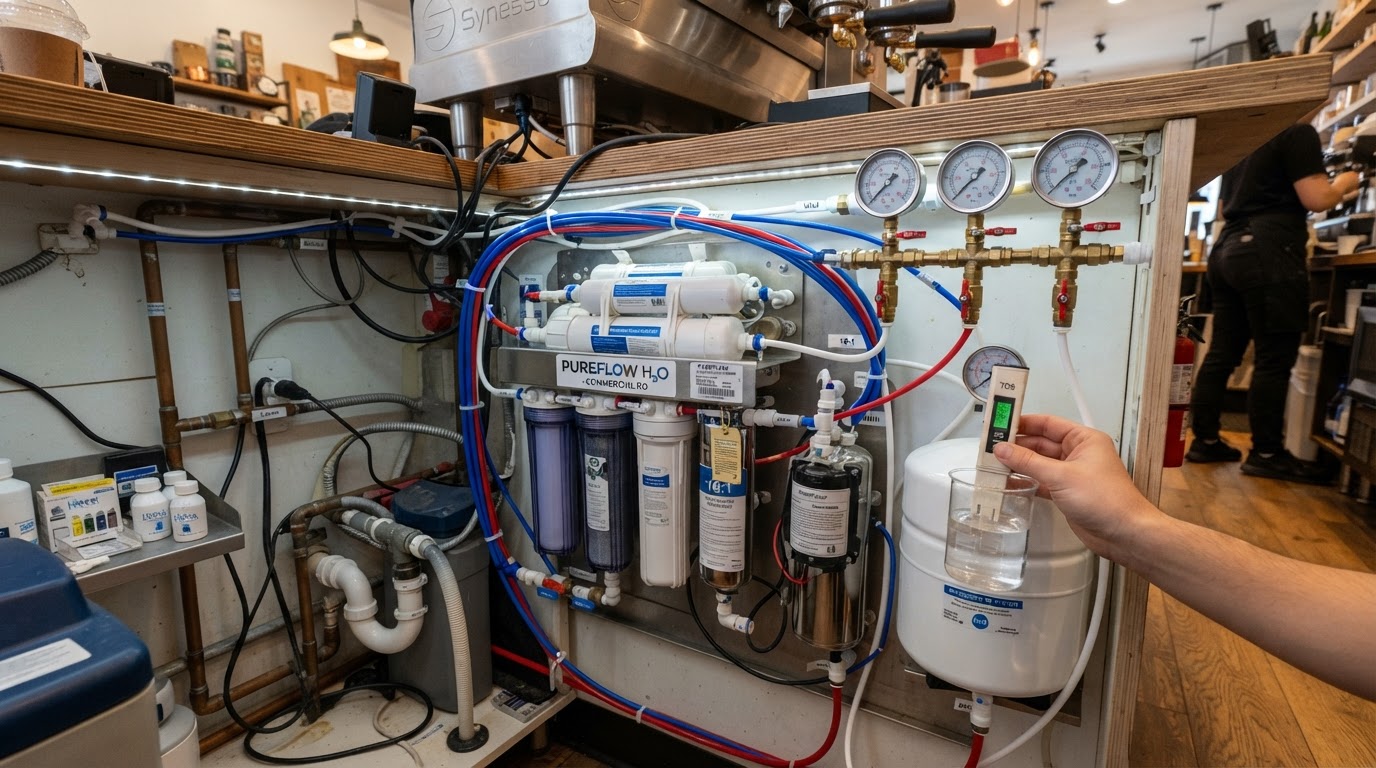
Water Filtration Pre-Installation: Install and flush the water filtration system before connecting the espresso machine. New filter cartridges contain manufacturing residues and carbon fines that must be flushed out before the water reaches the machine. Run at least five gallons of water through the filter system and drain line before connecting the espresso machine's supply line. Test the filtered water for TDS and hardness to confirm the filtration is working correctly. If the water is not within the target range, adjust the filtration before proceeding with the machine connection.
Ventilation & Heat Management: Commercial espresso machines generate significant heat, especially multi-group machines with large steam boilers. Ensure the area around the machine is well-ventilated to prevent heat buildup that affects both the equipment and the staff working nearby. If the machine is in an enclosed alcove or under cabinetry, consider auxiliary ventilation. The machine's cooling fan draws air from the rear and exhausts upward or sideways; do not block these airflow paths. Excessive ambient heat can cause the machine's electronics to run hotter than designed, shortening component life.
Move & Relocation Services: If you are relocating an existing machine to a new location, hire a professional mover experienced with commercial coffee equipment. The machine must be fully drained, disconnected from utilities, and secured for transport. Never move a machine with water in the boilers; sloshing water can short electronics or damage internal components. At the new location, the machine should be re-bench-tested before being put back into service, as transport can loosen fittings or damage seals. A professional relocation service handles draining, disconnection, transport, reconnection, and recommissioning safely.