
Essential Commercial Espresso Machine Maintenance & Daily Preventive Care
Operating a busy café or restaurant espresso bar requires daily diligence and scheduled technical maintenance to avoid costly mid-service breakdowns. Commercial espresso machines operate under sustained high pressure and temperature, and even minor neglect compounds into major component failures over weeks and months. A disciplined daily routine, combined with quarterly professional service, is the single most effective way to protect your capital investment and keep drinks flowing during peak hours.
Daily Backflushing Protocol: Every commercial espresso machine should be chemical backflushed with food-grade detergent at the end of every operating day. This removes coffee oils and particulate buildup from the solenoid valve and brew group. Insert a blind (blank) basket into the portafilter, add the manufacturer-recommended amount of cafiza-style detergent, lock the portafilter into the group head, and run the brew cycle in five-to-ten-second pulses for roughly ten cycles. Finish with two to three water-only backflush cycles to rinse residual detergent from the group internals. Skipping this step allows oxidized coffee oils to coat the three-way solenoid valve, eventually causing it to stick open or leak continuously.
Group Head Gaskets & Shower Screens: Gaskets harden over time under heat and pressure. Replacing rubber group head gaskets every 3 to 6 months ensures a leak-free portafilter seal and consistent extraction pressure. A hardened or cracked gasket allows pressurized water to bypass the coffee puck, producing thin, under-extracted shots and spraying hot water toward the barista. Shower screens should be removed and soaked in detergent solution weekly; a clogged screen distributes water unevenly across the coffee bed, creating channeling and inconsistent flavor. Always inspect the dispersion plate beneath the screen for scale and coffee residue at the same time.
Steam Wand Sanitation & Purging: Purging steam wands immediately before and after steaming milk prevents milk solids from being sucked back into the steam boiler, which can contaminate water and cause thermistor errors. Wipe the wand with a damp cloth after every use, and perform a deep clean with a dedicated milk frother cleaner at the end of each day. For machines with auto-frothing or milk-foaming attachments, disassemble and soak all milk-contact components daily. Milk stone buildup inside steam valves restricts flow, reduces steam pressure, and can harbor bacteria that pose food-safety risks.
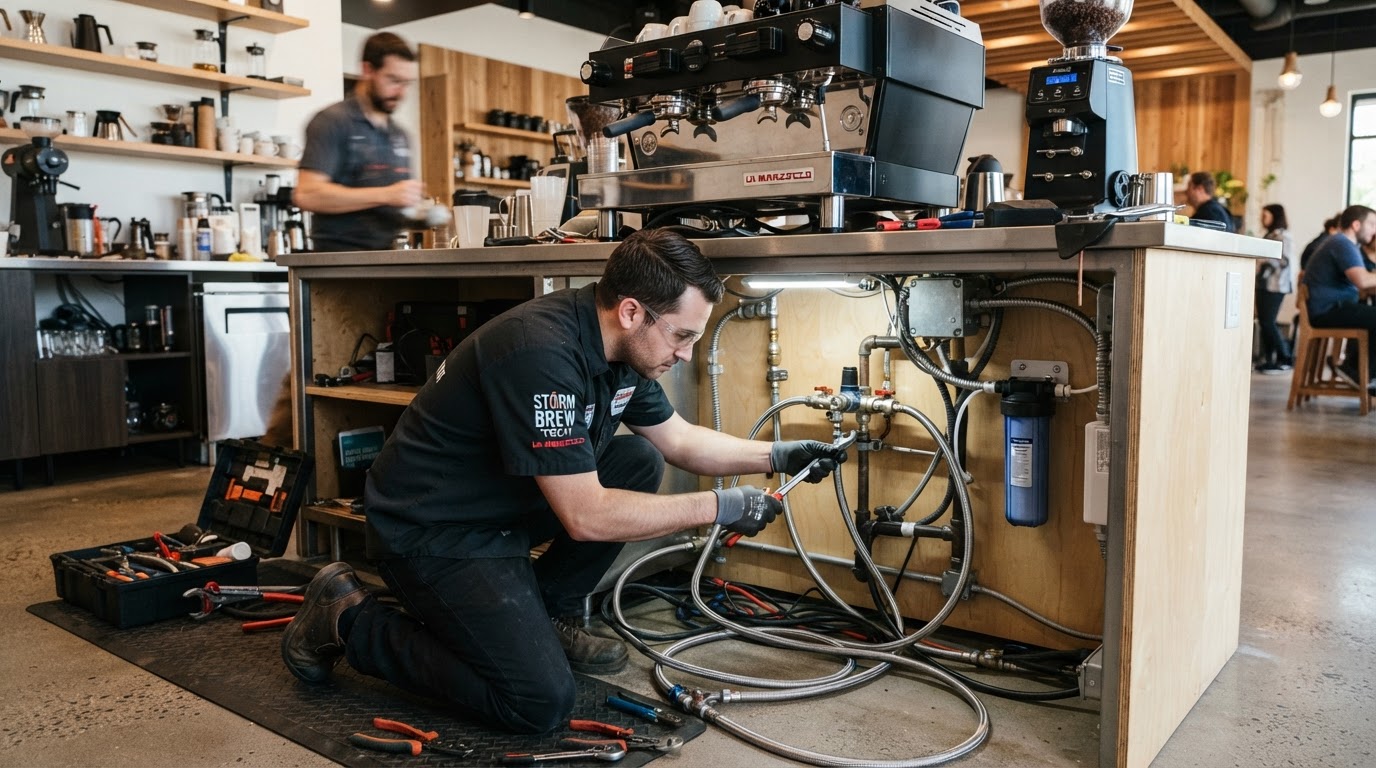
Water Softener & Filter Monitoring: Most commercial machines pair with an in-line water softener or filtration cartridge. Track daily water volume through your meter and replace filter media on a gallon-based schedule rather than a calendar schedule. A saturated softener stops removing hardness minerals, allowing scale to form rapidly inside the brew and steam boilers. Check the pressure differential across the filter weekly; a significant drop indicates the cartridge is loaded and nearing the end of its service life.
Weekly Deep-Cleaning Tasks: Beyond the daily routine, schedule a weekly deep clean that includes soaking portafilter baskets and shower screens in detergent, scrubbing the drip tray and drain box, descaling the steam wand tip orifices, and inspecting all visible seals and gaskets. Vacuum the area behind and beneath the machine to prevent dust infiltration into cooling fans and electronics. Verify that the drip tray drain line is clear and flowing freely, as a blocked drain can overflow onto electrical components.
When to Call a Certified Tech: If you notice steam pressure drops, slow shot flow despite proper grind size, or unusual pump noises, schedule an immediate diagnostic visit before heating elements fail. Other warning signs include water pooling under the machine, error codes on the display panel, inconsistent shot temperatures, and tripping breakers. A technician can measure boiler pressure, test heating element continuity, inspect expansion valves, and verify the pump is delivering the correct flow rate before a minor issue becomes a bar-down emergency.
Documentation & Service Logs: Keep a written or digital service log recording every maintenance task, filter change, gasket replacement, and service visit. Note the date, the technician's name, parts replaced, and any observations. This history helps your service provider spot recurring issues, predict when major components are due for replacement, and provide accurate warranty claims. A well-documented machine is also more attractive to buyers if you ever upgrade or sell your equipment.