
Diagnosing & Repairing Common Espresso Machine Water Leaks
Water leaks are the most common mechanical issue in commercial espresso machines, and they range from harmless drips to serious failures that can short electronics and destroy cabinetry. Learning to identify the source and severity of a leak helps you decide whether to address it immediately, schedule a service visit, or shut the machine down to prevent further damage. A systematic approach to leak diagnosis saves money and prevents minor leaks from becoming major failures.
Group Head Leaks: The most common leak source is the group head gasket, the rubber seal that creates a watertight connection between the portafilter and the group head. A worn or hardened gasket allows pressurized water to spray from the group head during extraction. This is a normal wear item that should be replaced every 3 to 6 months. If water drips from the group head when the portafilter is locked in but not brewing, the three-way solenoid valve may be leaking, which requires a technician to clean or replace. Inspect the group head gasket visually for cracks, hardness, or deformation, and replace it if it shows any of these signs.
Steam Wand & Hot Water Tap Leaks: Steam wand leaks typically come from the wand's internal valve or the wand joint O-ring. If steam or water drips from the wand tip when the valve is closed, the valve seat or steam valve packing is worn. Hot water tap leaks are similar; the tap valve washer hardens and allows water to seep through. Both of these are common wear items that a technician can replace quickly. If the leak is from the wand joint where it connects to the machine, the joint O-ring needs replacement. Do not overtighten the wand or tap to stop a leak; this can damage the valve seat and make the repair more expensive.
Boiler & Heating Element Leaks: Leaks from the boiler or heating element flange are serious and require immediate attention. The heating element enters the boiler through a flange sealed with a gasket. Over time, this gasket hardens and begins to weep water. If you see water or mineral deposits around the element flange, the gasket needs replacement. Do not ignore this; a leaking element gasket can fail suddenly, releasing scalding water and steam under pressure. If water is visible on the boiler body itself (not at a fitting), the boiler may have developed a crack or pinhole from corrosion or scale damage, which may require boiler replacement, a major repair.
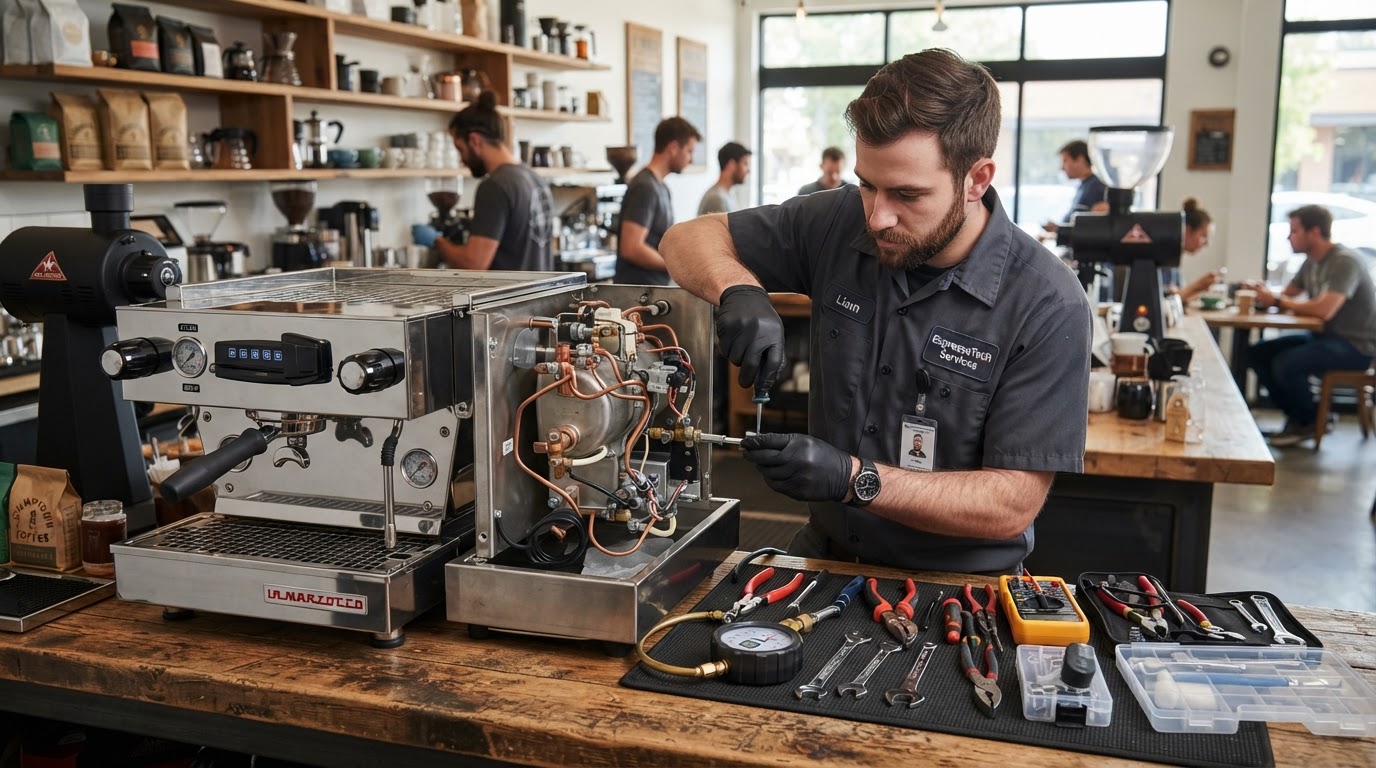
Pump & Plumbing Leaks: The vibration or rotary pump has inlet and outlet connections that can leak. A leak at the pump inlet is typically a loose hose clamp or a cracked inlet fitting; a leak at the pump outlet is usually a failed pump seal or a cracked outlet fitting. Pump leaks can also indicate that the pump itself is failing; a pump that leaks from its body seal will soon stop generating adequate pressure. Internal plumbing connections throughout the machine use O-rings and compression fittings that can loosen from vibration or harden from heat. A technician can systematically trace a leak to its exact source using pressure testing.
Identifying Leak Severity: Not all leaks require immediate shutdown. A slow drip from a group head gasket during extraction can wait until the next service visit. A steady stream of water, any leak that contacts electrical components, or any leak from the boiler or element flange requires immediate attention. If water is pooling on or near electrical connections, disconnect power to the machine immediately and call a technician. If the leak is contained in the drip tray and the machine is operating normally, you can usually continue service while waiting for a scheduled repair.
Preventing Leaks Through Maintenance: Most leaks are preventable through regular gasket and seal replacement. A quarterly preventive maintenance program that replaces group head gaskets, steam wand O-rings, and hot water tap washers on a schedule prevents the majority of leak failures. Water quality also plays a role; scale deposits on valve seats and gasket surfaces accelerate seal wear. Proper water filtration and regular descaling extend the life of all seals and gaskets in the machine.
When to Call a Technician: Call a technician for any leak you cannot confidently trace to a user-replaceable gasket, any leak from the boiler or heating element, any leak that contacts electrical components, or any leak accompanied by other symptoms (error codes, pressure loss, unusual sounds). Do not attempt to disassemble the boiler, heating element, or pump yourself; these components operate under high pressure and temperature and improper reassembly can cause injury or catastrophic failure. A qualified technician has the tools, training, and parts to repair leaks safely and correctly.