
What to Expect From a Professional Commercial Espresso Machine Service Visit
A professional commercial espresso machine service visit is far more than a quick cleaning. It is a comprehensive assessment and calibration of every system that affects drink quality and equipment longevity. Understanding what a thorough visit includes helps operators evaluate whether they are receiving quality service and helps them communicate effectively with their technician.
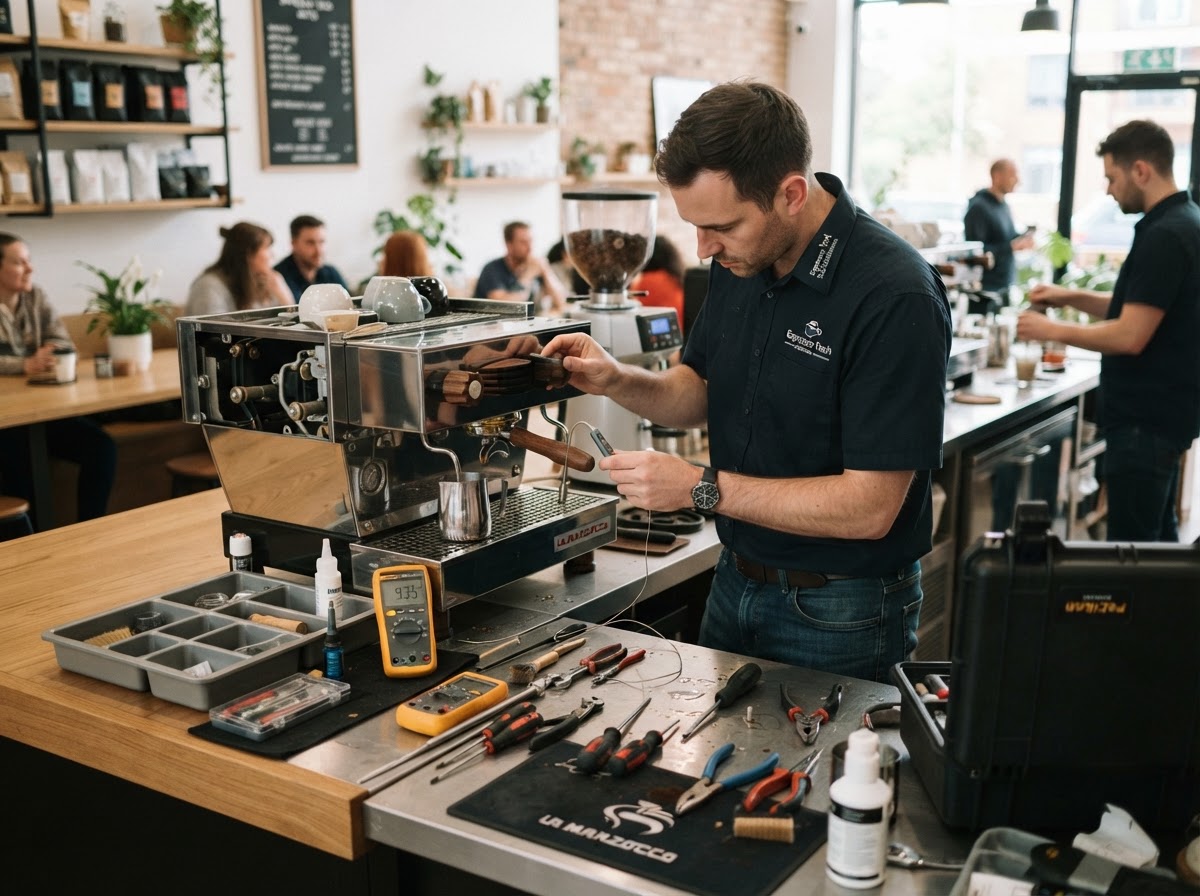
Diagnostic Assessment: The visit begins with a full diagnostic assessment. The technician verifies water supply pressure, electrical voltage, and the condition of the water filtration system. Brew pressure is measured with a pressure gauge portafilter, and brew temperature is verified with a Scace device or thermofilter. These baseline measurements reveal developing problems before they become failures.
Consumable Replacement: Wearing parts are replaced on a schedule rather than waiting for failure. Group head gaskets, shower screens, anti-suction valves, and steam wand O-rings are replaced quarterly. Expansion valve and vacuum breaker seals are replaced annually. Proactive replacement of these inexpensive parts prevents the majority of leak and pressure failures.
Calibration: Brew and steam boiler temperatures are verified and adjusted to manufacturer specifications. The expansion valve is set to maintain the correct brew pressure, typically 8.5 to 9.5 bar. Steam boiler pressure is usually set between 1.1 and 1.4 bar. These settings drift over time, so quarterly verification keeps extraction consistent.
Water Treatment Evaluation: The technician tests the pressure differential across the water filter and checks incoming water hardness. A saturated filter stops removing hardness minerals, allowing scale to form rapidly inside the boilers. Filter replacement is scheduled based on actual gallon throughput rather than a calendar, ensuring protection matches your real water usage.
Electrical and Mechanical Inspection: All electrical connections are inspected for heat damage, and the pump's pressure output and electrical draw are checked. Cooling fans are verified to operate freely, and the drip tray drain line is checked for blockages. These inspections catch developing issues that could cause failures or safety hazards.
Documentation and Reporting: After the visit, the technician provides a written report listing all parts replaced, measurements taken, and recommendations for future service. This documentation builds a service history that helps predict future needs, supports warranty claims, and justifies the service investment to ownership. Clear reporting is the hallmark of a quality commercial espresso machine service provider.