
Commercial Espresso Machine Repair: A Technician's Diagnostic Approach
Commercial espresso machine repair requires specialized knowledge because these machines combine pressurized boilers, precision pumps, electronic controls, and heated group heads into a single integrated system. A skilled technician follows a diagnostic sequence that isolates the root cause rather than guessing at symptoms. Understanding this approach helps operators communicate effectively and recognize quality service.
Starting with the Basics: Before opening the machine, a technician verifies the fundamentals: water supply pressure, electrical voltage at the receptacle, and the condition of the water filter. Many apparent machine failures trace to an interrupted water supply, a tripped breaker, or an exhausted filter. Confirming these basics first avoids unnecessary disassembly and misdiagnosis.
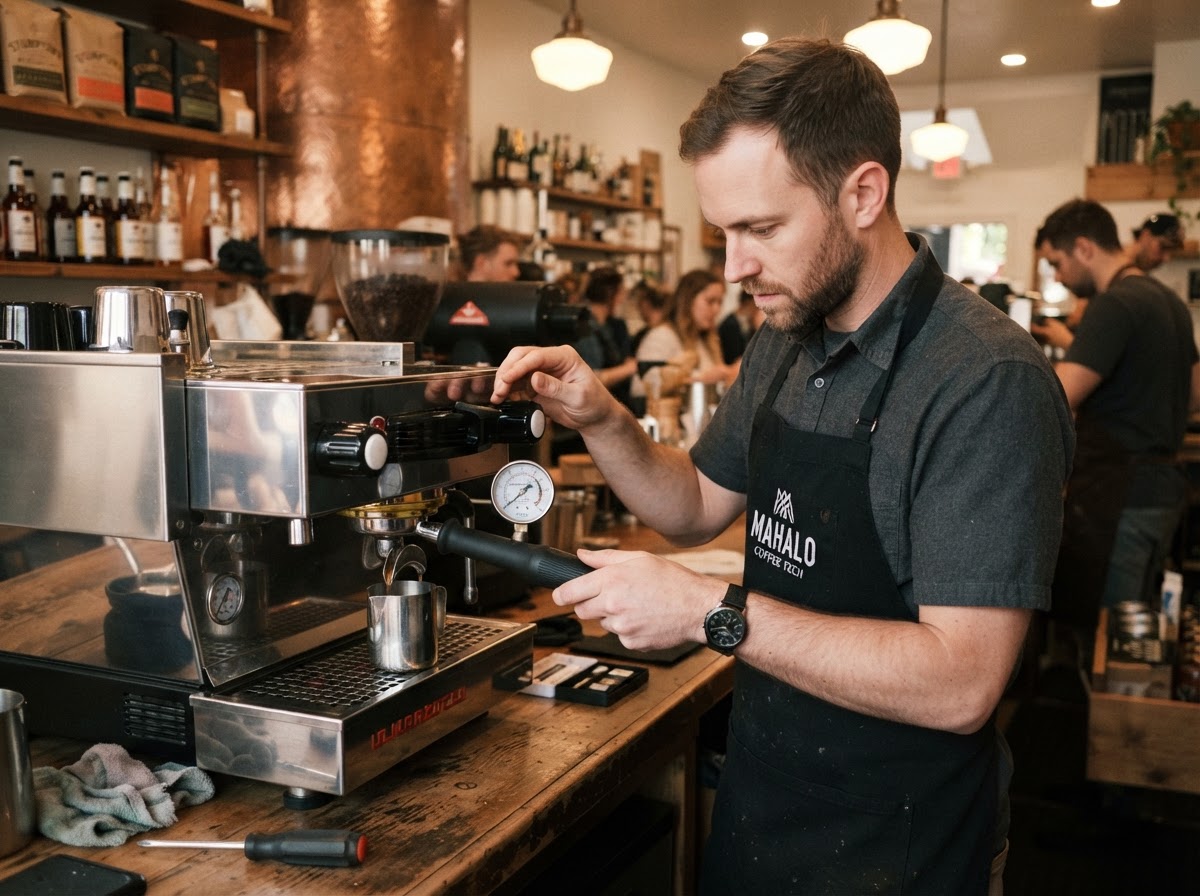
Pressure and Flow Diagnostics: Brew pressure is measured with a pressure gauge portafilter, and flow rate is checked at the group head. Low pressure can indicate a failing pump, a clogged inlet filter, or an expansion valve bypassing too much water. High pressure or slow flow may point to scale in the group head or a restricted brew path. These measurements guide the technician to the affected component.
Temperature Verification: A Scace device or thermofilter measures actual water temperature at the group head under brewing conditions. If measured temperature differs from the setpoint by more than a degree, the technician calibrates the PID offset or replaces a drifting thermistor. Temperature stability is the foundation of consistent espresso, and drift is a common cause of flavor inconsistency.
Component-Level Repair: Once the fault is isolated, the technician replaces the affected component using OEM or manufacturer-approved parts. Common repairs include solenoid valve replacement, pump replacement, heating element gasket replacement, and control board service. Reusing old seals during a repair often causes new leaks, so a thorough technician replaces all related gaskets and seals.
Post-Repair Verification: After any commercial espresso machine repair, the technician runs test shots to verify brew temperature, pressure, and flow rate, checks for leaks under the machine, and confirms steam wand performance. Only after the machine operates correctly across all parameters is it returned to full service. This verification step prevents repeat failures and ensures the repair actually resolved the issue.
When to Repair vs. Replace: For older machines with multiple failing components, a technician can provide an honest assessment of whether repair or replacement is more economical. A machine that requires a new boiler, control board, and pump simultaneously may be approaching the end of its useful life. A trusted technician helps you make this decision based on facts rather than pushing unnecessary repairs.