
FETCO & Bunn Commercial Drip Brewer Calibration & Valve Repairs
Commercial drip coffee brewers process hundreds of gallons per month in office buildings, convenience stores, and hotel breakfast buffets. While drip brewers are mechanically simpler than espresso machines, their high volume and continuous duty cycle create their own maintenance demands. Neglected drip brewers produce sour, weak, or burnt-tasting coffee and can develop leaks that damage countertops and cabinetry.
Sprayhead Lime Deposits: Clogged sprayheads cause uneven water dispersion over coffee beds, leading to sour, under-extracted batch brews. The sprayhead distributes water in a pattern designed to saturate the entire coffee bed evenly. Mineral deposits and coffee oils gradually block the sprayhead's tiny orifices, concentrating water in the center and leaving the edges dry. Remove and soak the sprayhead in descaling solution weekly, and clear each orifice with a fine wire or pin. Inspect the sprayhead screen or plate for warping or corrosion, and replace it if the spray pattern is visibly uneven.
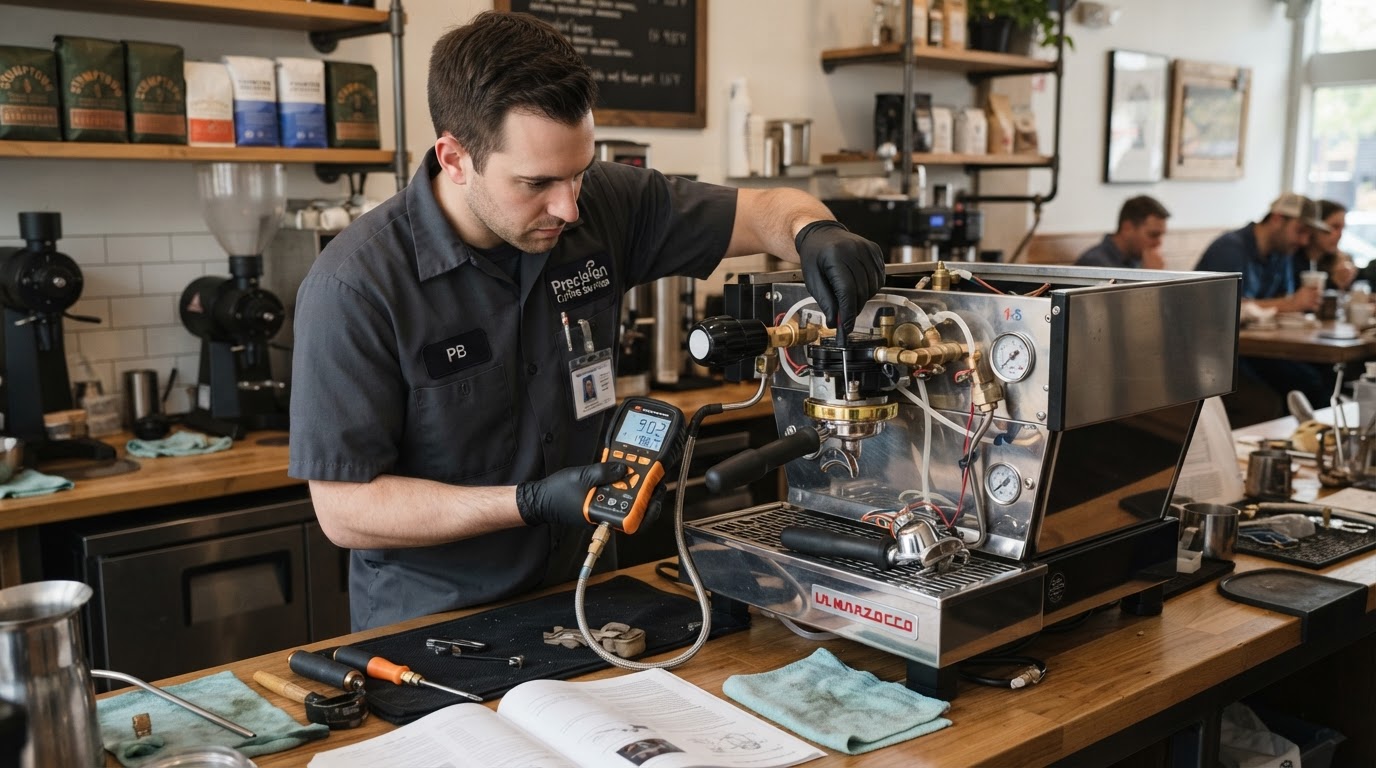
Temperature Calibration: Brew water must remain between 195°F and 205°F for optimal extraction. Thermistor and triac control board replacements restore precise heat. If your coffee tastes sour or weak, the brew temperature may be too low; if it tastes harsh or burnt, the temperature may be running too high or the coffee is sitting on the warmer too long. A technician can verify actual water temperature at the sprayhead with a calibrated thermometer and adjust the control board setpoint. In older mechanical brewers, the thermostat may drift; replacement restores accuracy.
Shuttle Server & Urn Maintenance: Replacing sight glass seals and dispensing faucet washers stops continuous dripping and burnt coffee tastes. Shuttle servers and insulated urns keep brewed coffee hot without continued heating, which preserves flavor better than warmers. However, their dispensing valves and sight glasses develop leaks over time. A dripping faucet wastes coffee and creates a mess; a leaking sight glass allows air ingress that can affect dispensing. Replace worn faucet washers and sight glass gaskets during quarterly service. For heated shuttle servers, verify the heating element is functioning and the thermostat is accurate.
Solenoid Valve Inspection: The inlet solenoid valve controls water flow into the brewer. Over time, mineral deposits and sediment can prevent the valve from fully closing, causing continuous slow water flow that overfills the brew tank or causes dripping from the sprayhead between brew cycles. If you hear water flowing when the machine is idle, the solenoid valve may need cleaning or replacement. A technician can disassemble and clean the valve seat, or replace the valve entirely if the coil is weak or the seat is permanently damaged.
Warmers & Hot Plate Care: Glass carafe warmers and hot plates degrade over time. A warped or corroded hot plate transfers heat unevenly, scorching the bottom of the carafe while the top stays lukewarm. Inspect hot plates for warping, pitting, and discoloration. Clean warmers daily with a damp cloth to remove coffee spills that bake onto the surface and create off-flavors. If a warmer no longer maintains temperature, the element or thermostat has likely failed and the assembly should be replaced.
Decalcification & Deep Cleaning: Even with good filtration, drip brewers accumulate scale in the hot water tank over time. Run a manufacturer-approved descaling cycle quarterly (or more often in hard-water areas) to dissolve internal scale. Follow the descaling cycle with multiple rinse cycles to ensure no descaling chemical remains. Deep-clean the brew funnel, decanters, and shuttles with hot water and detergent daily; coffee oils coat these surfaces and turn rancid, imparting bitter flavors to fresh batches.
Plumbing & Water Line Checks: For plumbed-in brewers, inspect the water supply line, shutoff valve, and regulator quarterly. A partially closed or sediment-blocked shutoff valve reduces flow rate, extending brew cycle time and potentially causing under-extraction. Verify the incoming water pressure meets the manufacturer's specification (typically 20 to 80 psi). If your brewer feeds from a reservoir rather than a plumbed line, clean the reservoir weekly and check the float switch for proper operation.