
Commercial Coffee Machine Repair: Diagnosing the Most Common Failures
Commercial coffee machine repair demands a systematic approach because espresso equipment operates under sustained high pressure and temperature. A skilled technician traces symptoms to their root cause rather than simply replacing parts until the problem disappears. Understanding the most common failure modes helps operators communicate effectively with their service provider and recognize when a repair is urgent.
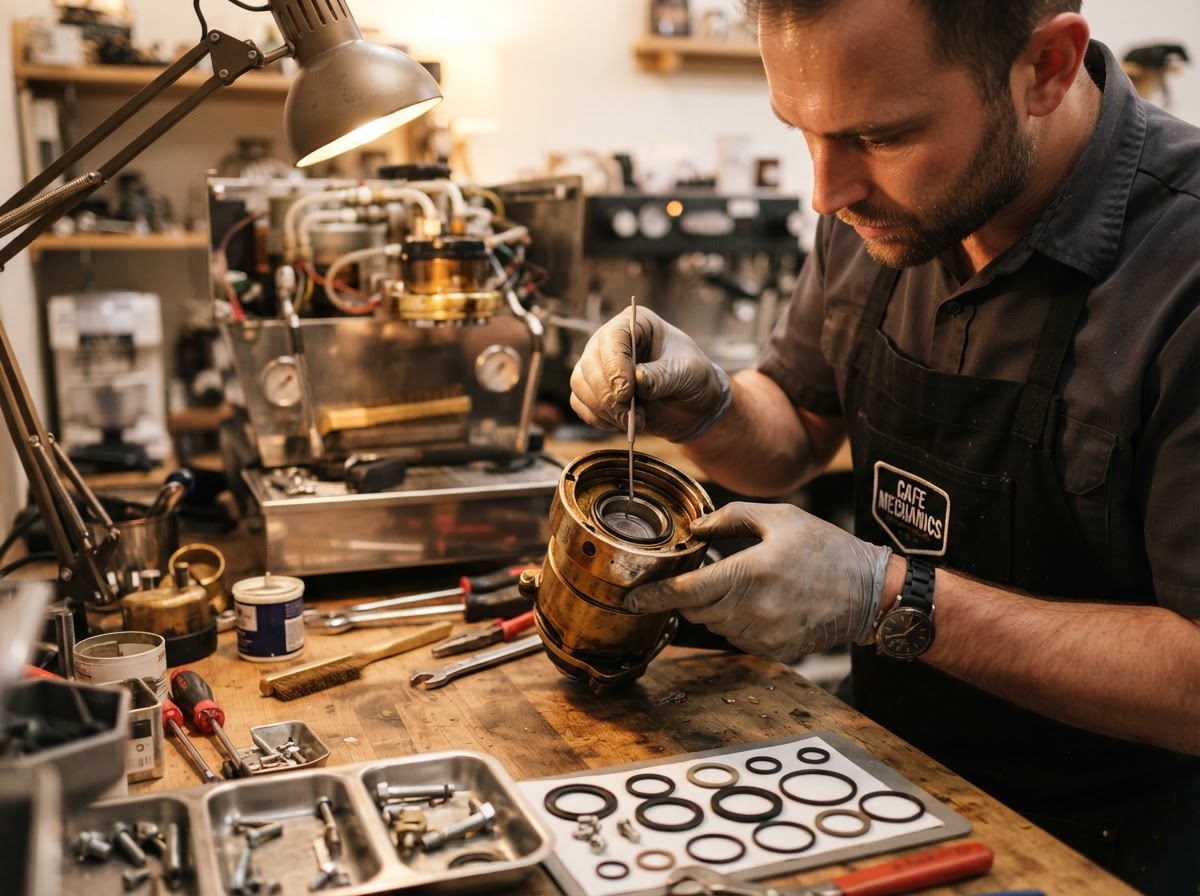
Group Head and Seal Failures: Worn group head gaskets are the most frequent repair item. A hardened gasket allows pressurized water to bypass the coffee puck, producing thin shots and spraying hot water toward the barista. Replacing gaskets every three to six months prevents most group head leaks. If water drips from the group head while idle, the three-way solenoid valve may need cleaning or replacement, a job for a qualified technician.
Pump and Pressure Problems: Low brew pressure can stem from a failing pump, a clogged inlet filter, or an expansion valve set too low. A technician measures pump output pressure and flow rate directly to isolate the cause. Vibration pumps typically last three to five years under commercial use, while rotary pumps can exceed ten years. Running a pump dry destroys it quickly, so always confirm water supply before activating the machine.
Heating Element and Boiler Issues: Scale-coated heating elements draw excess current, trip breakers, and eventually rupture. If your machine takes longer to reach temperature or trips breakers, scale is a likely culprit. A technician can descale the boiler and inspect the element for damage. Leaks from the heating element flange require immediate attention, as a failed gasket can release scalding water under pressure.
Electrical and Control Board Faults: Error codes on modern machines point to specific faults such as flow meter errors, thermistor failures, or control board issues. Photograph the error code and the machine's data plate before calling for service so the technician can bring the correct parts. Do not repeatedly reset a tripping breaker; this indicates a short that can cause further damage or create a fire hazard.
When to Call a Professional: Any repair involving the boiler, heating element, pump, or electrical components should be performed by a qualified technician. These components operate under high pressure and temperature, and improper reassembly can cause injury or catastrophic failure. Do not attempt to bypass safety interlocks, pressure controls, or thermostats.
Preventing Future Repairs: Most commercial coffee machine repair visits are the end result of issues that developed over weeks or months. A consistent preventive maintenance program, daily cleaning routine, and attention to early warning signs prevent the majority of breakdowns. Partnering with a reliable service provider keeps your equipment running and your repair costs predictable.