
Commercial Coffee Machine Installation: Site Prep, Utilities, and First Power-Up
A successful commercial coffee machine installation begins weeks before the machine arrives, with careful preparation of the electrical, plumbing, and physical space. Failing to prepare properly can turn a one-day installation into a multi-day delay, or worse, damage the machine on its first power-up. Following a comprehensive preparation checklist ensures the installation day goes smoothly and the machine starts producing great coffee immediately.
Electrical Requirements: Most two-group and three-group commercial machines require single-phase 208V or 240V power at 20A to 50A on a dedicated circuit. Some large machines require three-phase power. Check the machine's data plate for the exact voltage, amperage, phase, and receptacle type. Have a licensed electrician install a dedicated circuit with the correct specifications and a compatible receptacle. Never share an espresso machine circuit with other equipment; voltage sags from shared circuits can damage electronics.
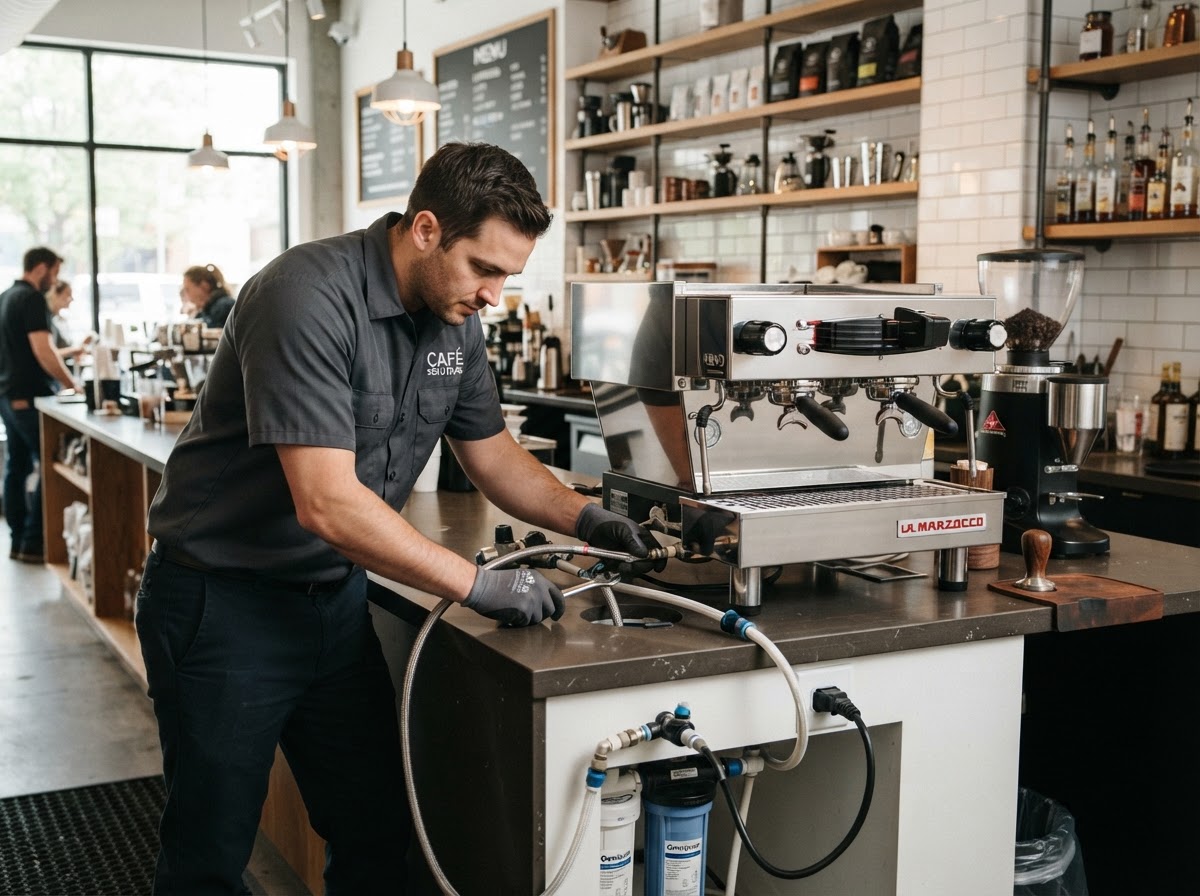
Water Supply: The machine needs a dedicated cold water supply line with a shutoff valve within a few feet of the installation location. The supply line should be 3/8 inch minimum with a dedicated shutoff valve, not a self-piercing saddle valve. Incoming water pressure should be between 20 and 80 psi; install a pressure regulator if building pressure is higher. The water must be filtered and, if necessary, softened before reaching the machine. Flush the filter system thoroughly before connecting the machine.
Drain Requirements: The machine needs a drain connection for wastewater from the drip tray and, on some models, the brew group rinse cycle. The drain must be an indirect connection with an air gap, meaning the drain hose empties into a floor drain or drain box with a visible air gap between the hose end and the drain grate. This prevents sewer backflow and is required by most plumbing codes. The drain line must have a continuous downward slope with no sags, and must be within five feet of the machine.
Counter and Clearance: The counter must support the machine's weight, which can exceed 150 pounds for a three-group machine. Verify the counter material and support structure can handle both the static weight and pump vibration. Allow at least 12 inches of clearance above the machine for service access, since the technician must be able to remove the top panel. Leave at least 6 inches behind the machine for water, drain, and electrical connections.
Bench Testing: Professional installers bench test machines in their workshop before on-site delivery. This involves filling the boiler, powering up, checking for leaks under pressure, calibrating temperatures, and running test shots. Bench testing catches shipping damage and manufacturing defects before the machine is on your counter. Ask your installer whether bench testing is included in the installation service.
Ventilation and Logistics: Commercial espresso machines generate significant heat. Ensure the installation area is well-ventilated and that the machine's cooling fan airflow paths are not blocked. Plan the delivery route from the loading dock to the installation location, verifying that doorways, hallways, and elevators can accommodate the machine's dimensions and weight. Coordinate with your electrician, plumber, and installer so all utilities are ready before the machine arrives. A well-coordinated commercial coffee machine installation minimizes downtime and ensures the machine is operational on the planned day.