
Coffee Roaster Exhaust System Maintenance & Fire Safety
Coffee roaster exhaust systems are critical safety equipment that removes smoke, chaff, and volatile compounds from the roasting environment. These systems handle flammable materials at high temperatures, and neglecting their maintenance is one of the leading causes of fires in coffee roasteries. A disciplined maintenance program for your exhaust system protects your facility, your equipment, and your staff, and it is often a requirement of your insurance coverage and local fire code.
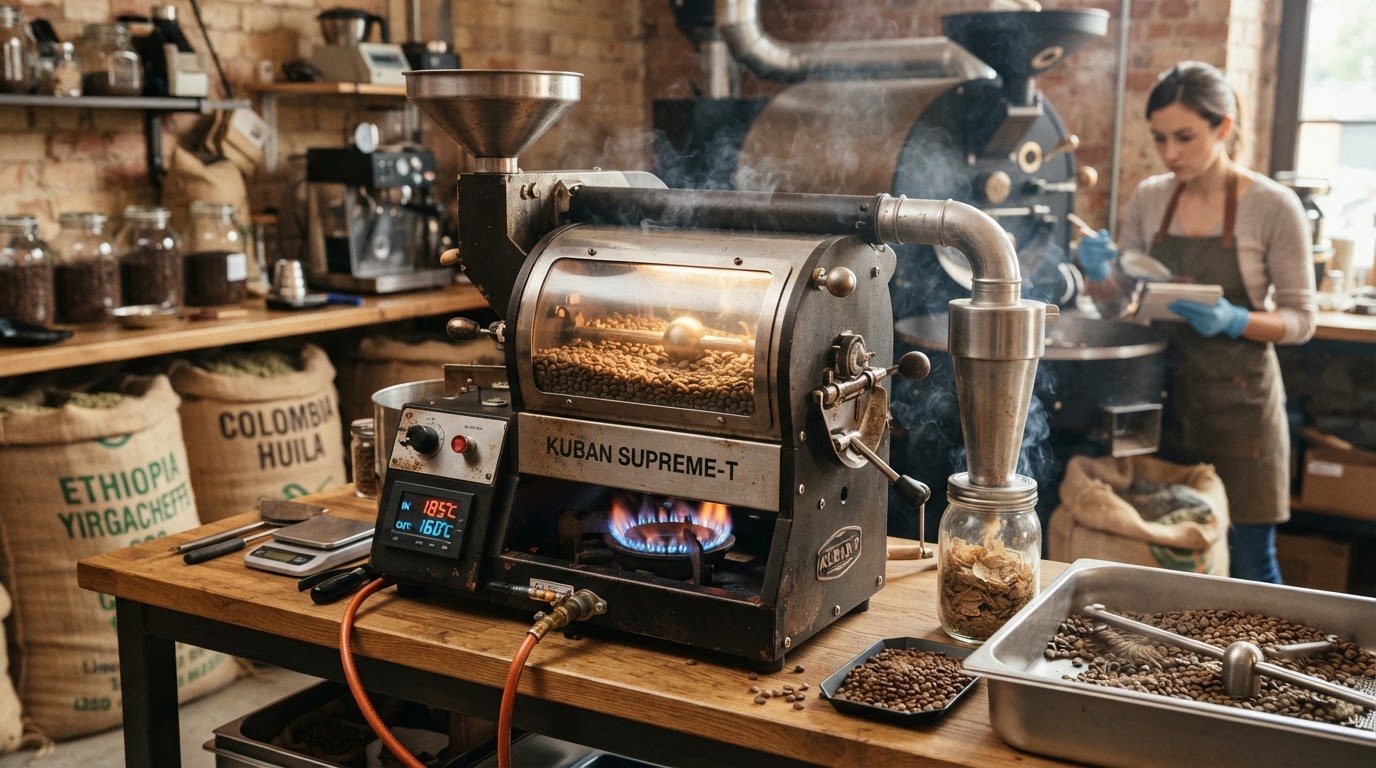
Understanding the Exhaust System: A typical roaster exhaust system includes the roaster's internal fan, the chaff collector or cyclone, the exhaust ducting, and the external exhaust stack. The internal fan draws air through the roasting drum, carrying chaff (the papery skin that separates from the bean during roasting) and smoke into the chaff collector. The chaff collector uses centrifugal force or a screen to separate chaff from the air stream. The cleaned air continues through the ducting to the external stack, where it is discharged outside the building. Each component in this system requires regular maintenance to function safely and effectively.
Chaff Collector Maintenance: The chaff collector must be emptied and cleaned after every roasting session. Chaff is extremely flammable; a full chaff collector is a fire waiting to happen. Remove all chaff from the collector, and inspect the collector interior for oily residue buildup. Coffee oils condense on the cooler metal surfaces of the chaff collector and ducting, forming a sticky, flammable residue that accumulates over months. This residue must be periodically scraped and cleaned; a professional exhaust cleaning service can perform this deep cleaning annually or semiannually depending on your roasting volume.
Duct Inspection & Cleaning: Inspect the exhaust ducting regularly for chaff and oil residue buildup. Remove access panels (if equipped) and visually inspect the interior of the ducts. If you cannot see through the duct or if there is visible residue buildup, the ducting needs cleaning. Duct cleaning is typically performed by a professional service that uses rotating brushes and high-pressure cleaning to remove accumulated residue. The frequency depends on your roasting volume and the types of coffee you roast; dark roasts produce more oil residue than light roasts. A typical schedule is annual cleaning for moderate-volume roasteries and semiannual for high-volume operations.
Fire Prevention Protocols: Never leave a roaster operating unattended. Always have a charged fire extinguisher rated for Class K (cooking oil and grease fires) and Class ABC within reach of the roaster. If a chaff fire starts in the exhaust system, do not open the roaster or duct access panels; introducing oxygen can cause a flash fire. Shut down the roaster, close the damper if equipped, and use the fire extinguisher on accessible points. If the fire is in the ducting and cannot be safely reached, evacuate and call the fire department. Install a spark arrestor in the exhaust system if your roaster does not have one; this device catches sparks before they reach the stack.
External Stack Maintenance: The external exhaust stack must extend above the roofline and be clear of obstructions. Inspect the stack annually for bird nests, debris, and structural integrity. A blocked stack causes backdraft, pushing smoke and chaff back into the roastery. Verify that the stack cap (if equipped) allows free airflow while preventing rain entry. Check the stack for corrosion, especially at joints and seams; a corroded stack can fail, allowing exhaust to leak into the building. Have a qualified HVAC or exhaust service contractor inspect and service the external stack annually.
Fan & Motor Service: The exhaust fan motor and bearings require periodic lubrication and inspection. Listen for bearing noise, check for excessive vibration, and verify the fan is moving the expected volume of air. A fan that is losing capacity may have worn bearings, a buildup on the fan blades, or a failing motor. Reduced exhaust airflow changes the roaster's thermal dynamics, affecting roast profiles and potentially allowing smoke and chaff to accumulate in the system. Have a technician service the fan motor and bearings annually. If the fan is belt-driven, inspect and replace the belt as needed.
Documentation & Compliance: Maintain records of all exhaust system inspections, cleanings, and service. Your insurance company and local fire marshal may require documentation of regular exhaust maintenance. Record the date of each cleaning, the service provider, what was cleaned, and any observations or recommendations. If you roast commercially, check your local regulations for specific exhaust system requirements, including stack height, spark arrestors, and cleaning frequency. Compliance with these regulations protects your business legally and financially, and it ensures your roastery operates safely for years.